CCTV Drain Inspection Teralba
A CCTV drain inspection in Teralba puts a lit camera on a cable into your pipe, so you and the plumber can both see the fault on a screen before a repair is priced. The plumber in Teralba films roots, breaks, sags and grease along the line, and you get a fixed figure up front.
What this page covers. The blocked drains hub handles the clearing itself; here it is the camera: when it earns its keep, what it finds, and what the run costs. Ring (02) 4093 0558 to book one.
Licensed plumbers and gas fitters · NSW Lic. 359278C
Last updated September 2026
When Does a Drain Camera Earn Its Keep?
A camera run makes sense when guessing would cost you, for example:
- A drain that has blocked more than once, because repeat blockages point to a fault in the pipe rather than bad luck
- A slow line with no obvious cause, where the answer sits somewhere along a run you cannot see
- Water rising in the yard or at the floor drain after rain, which can be a stormwater or a sewer problem, and the footage settles which
- Before buying a home on an older block, where the sewer condition is the one thing a building inspection cannot see
A second blockage on an old line is the camera's cue.
How the Camera Run Works
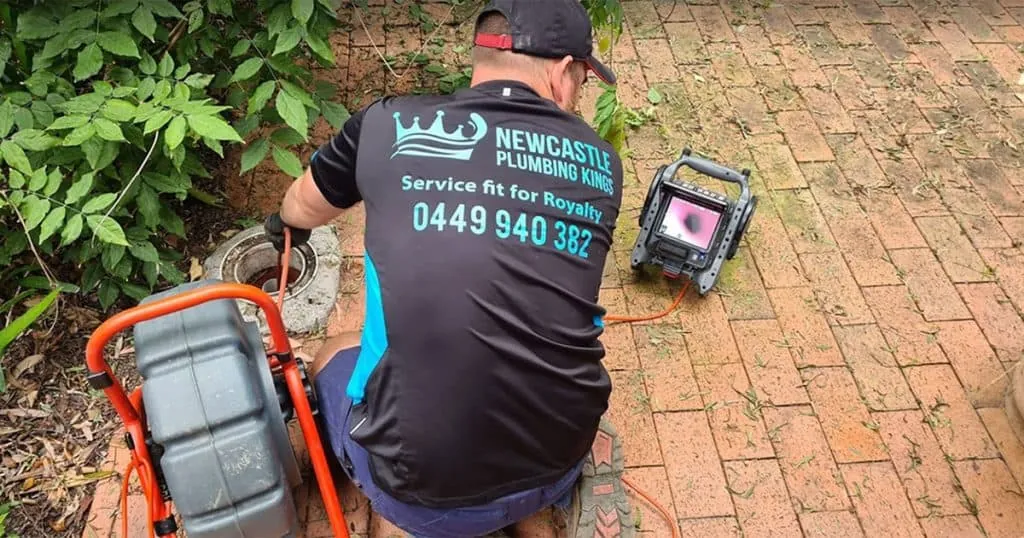
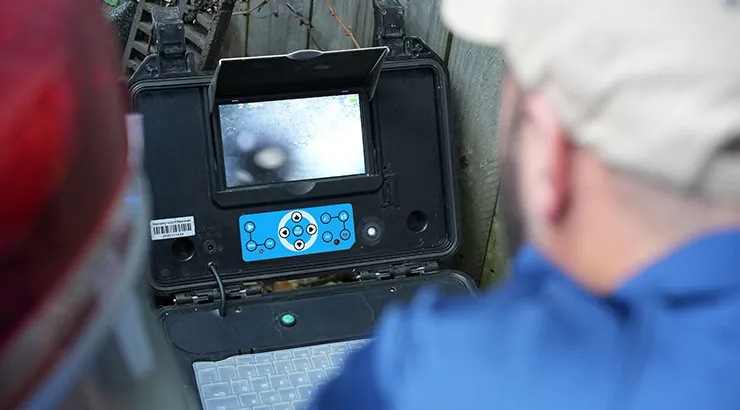
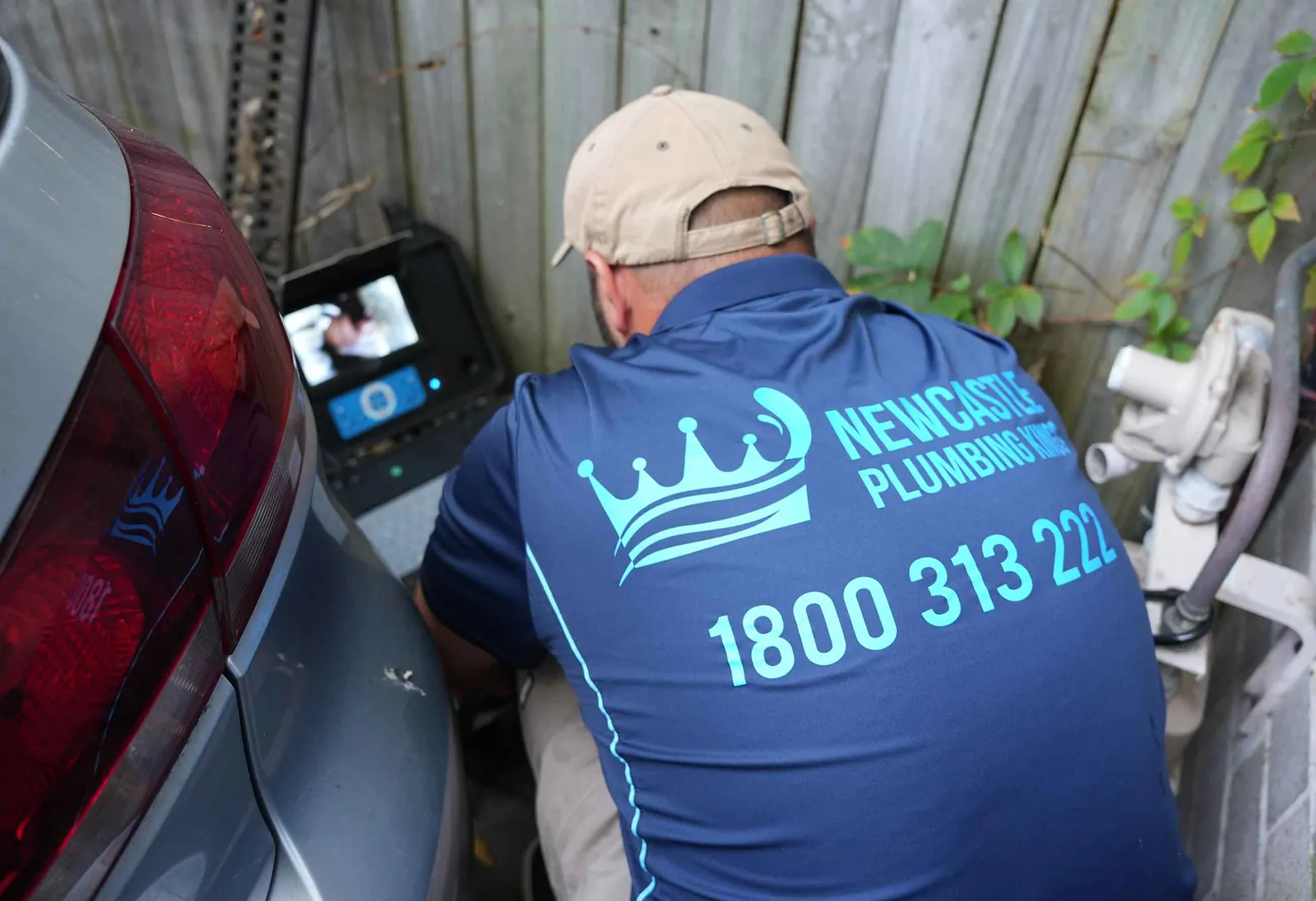
The plumber opens the line at an access point, or removes a toilet, and feeds the camera through on its cable. The head carries its own light, and the footage shows on screen as it travels, with a counter recording the distance down the pipe.
Three steps, the same every job:
- 1
Find the fault
The camera passes the blockage or the suspect section and records what is there: roots, a cracked wall, a sag holding water, or grease built up over years.
- 2
Measure the spot
The distance counter marks where the problem sits, so a repair, if one is needed, targets one section of pipe instead of the whole line.
- 3
Prove the fix
After drain jetting or a clearing pass, the camera goes down again to confirm the full pipe is open, not just a hole punched through the middle.
Roots on screen lead to tree root removal, where the cutter and the entry joint are dealt with. Where it shows a cracked or collapsed section, pipe relining can repair the line without digging up the yard.
What Shapes the Figure on a Camera Inspection?
We provide up-front, honest quotes that will always match the final price, should you decide to go ahead.
"Our blocked toilet morphed into a huge plumbing earthworks project due to extreme pipe damage from tree roots." Lauren
What sits behind the figure:
- The number of runs needed, since a before-and-after check on a clearing job is a different scope to a single diagnostic pass
- How far the camera has to travel, and whether there is an opening at each end of the run or only one
- What the footage leads to, since a camera pass on a healthy line ends there, while a fault found turns into a quoted repair you choose separately
Why the footage matters. A recording of your pipe means the quote is built on evidence, not on what the last house on the street needed. The plumber walks you through the footage on screen, so you see the same thing they do.
Cameras Suit This Town's Ground
The oldest lines here were laid generations back
The ground works against those lines too
That is why the camera goes down before anyone quotes a dig. The footage tells us whether the job is a clearing pass, a relined section, or a blocked sewer repair, and the figure you approve matches the fault that is actually on screen.
When We're Not the Right Call
Our camera work covers the private line from the house to the connection point. If the footage runs into a fault in the shared main, that section is Hunter Water's to inspect and repair, and the recording helps you report it.
CCTV Drain Inspection Questions From Teralba
How much digging does a camera inspection involve?
None. The camera travels through the existing pipe from an access point or a removed toilet, so the yard, driveway and floors stay as they are. You watch the footage as it runs and see the fault on screen before any repair decision.
Do you run the camera before and after a clear in Teralba?
Both. The first run identifies what is causing the blockage, whether that is roots, a collapsed section or grease, and the second run confirms the line is properly open once cleared. That second pass is how you avoid paying for a clear that did not actually finish the job.
Can the camera tell the difference between roots and a broken pipe?
Yes. Roots show as fibrous strands crossing the pipe, while a break shows as a step or offset in the pipe wall with soil visible behind it. The footage also records the distance along the line, so the exact section needing repair is measured, not guessed.
Is a camera run worth it on a newer Teralba estate home?
It can be. Newer PVC lines hold up well, but a sag from poor bedding or debris left in the line during construction still shows up as recurring slow drains. A camera run settles the question straight away instead of repeated clearing.
Book a Camera Run
Call (02) 4093 0558 or send the form below. Available 24/7, you see a fixed figure ahead of any work, and every job carries our 365-day warranty on all work.
Request a callback
Leave a name and number and a plumber will ring you back.